
Do Lapidary Saw Blades Cut Fingers? How to Prevent Binding and Kickback
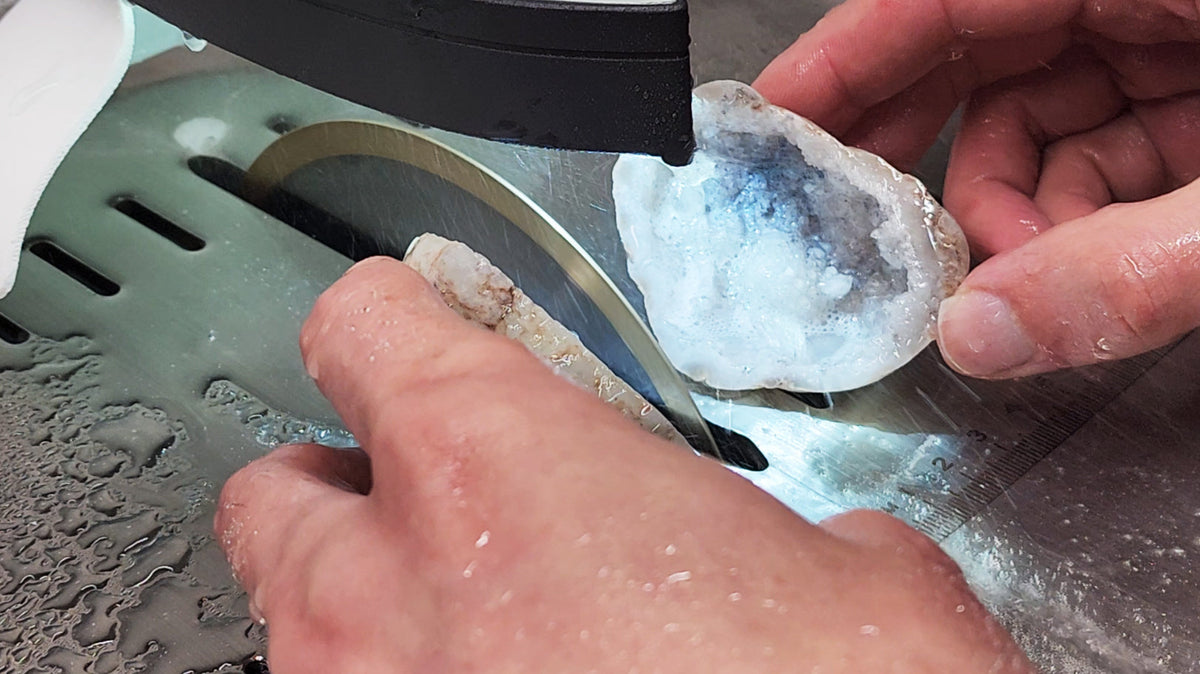
Yes. A spinning diamond lapidary blade can injure skin, including causing cuts, abrasions and serious injury. Continuous-rim diamond blades work differently from toothed woodworking blades, but they are not safe to touch. Never test a spinning blade with your fingers, and never bypass the guard.
Quick Answer: What Makes Rock Saw Cutting Safer?
A safer setup combines an appropriate diamond blade, secure workholding, correct coolant flow, a maintained guard, eye protection and controlled feed pressure. Blade binding can occur when a stone shifts, twists or closes on the blade. The goal is to prevent the workpiece from moving unpredictably and to stop immediately if cutting becomes abnormal.
Continuous-Rim Diamond Blades vs. Toothed Saw Blades
A continuous-rim diamond blade removes mineral material through abrasive action. A toothed woodworking blade uses cutting teeth. These are different mechanisms, but neither makes accidental contact acceptable. Diamond blades can abrade or cut skin, and broken material, splashes and moving machinery introduce additional hazards. Use appropriate eye protection and keep hands outside the blade path.
What Is Blade Binding?
Blade binding occurs when the cut closes against the blade, the stone changes orientation, or the workpiece is pushed in a way that creates excessive friction or side loading. Symptoms may include slowing, abnormal sound, vibration, a sudden stop or an uneven cut. Binding may damage the blade or machine and can cause unpredictable workpiece movement.
Five Practices to Reduce Blade Binding
1. Secure irregular stones before cutting
Round agates, geodes and small rough pieces are difficult to hold consistently. Use a workholding fixture approved for your saw, stone size and cutting operation. Do not assume a tile tray or improvised clamp can restrain an irregular stone. Confirm the compatibility and availability of any ToAuto adjustable cutting clamp or guide-rail accessory for your exact model.
2. Keep hands away from the cutting line
Position the stone and fixture so you can operate the machine without reaching across the blade. Keep the blade guard installed and use the manufacturer's approved feed method. A transparent guard can improve visibility, but it is not a substitute for proper workholding or safe hand placement.
3. Feed steadily without forcing the cut
Let the diamond blade remove material at a controlled rate. Excessive feed pressure can create blade deflection, overheating, binding and poor cut quality. If the cut slows, stop and inspect the setup rather than pushing harder.
4. Verify blade and coolant compatibility
Check blade diameter, arbor fit, rated maximum RPM, rim condition and coolant requirements. Use the saw's specified cooling system and ensure water reaches the intended cutting area. Do not assume that a particular RPM is safe for every blade or material.
5. Stop before diagnosing an abnormal cut
If the blade binds, chatters, slows abruptly or the stone shifts, switch off the machine, disconnect power and wait for all movement to stop. Only then inspect the stone, fixture, blade and cutting path. Never attempt to free a bound stone while the blade is powered.
How ToAuto Supports a Controlled Cutting Workflow
ToAuto Smart Lapidary Saws combine a brushless motor, adjustable speed control, a transparent blade guard and a gravity-fed coolant arrangement. Some configurations may use an adjustable safety cutting clamp. These features support a more controlled workflow when used correctly, but no accessory can eliminate blade-contact or binding risks. Verify the included fixture and approved operating instructions for your particular 6-inch or 8-inch model.
Lapidary Saw Safety Checklist
Before each session, check blade condition and fit, guard position, coolant flow, stable mounting, fixture security and the stone's visible fractures. Wear suitable eye protection, keep loose clothing and jewelry clear, and follow the manufacturer's dust-control and electrical-safety instructions. After cutting, disconnect power before cleaning or adjustments.
Frequently Asked Questions
Can a continuous-rim diamond blade cut skin?
Yes. It can cause abrasions, cuts and potentially serious injuries. Never touch a rotating blade.
Why does my lapidary blade bind halfway through a cut?
Possible causes include stone movement, cut closure, side pressure, unsuitable blade choice, excessive feed pressure or misalignment. Stop and inspect the full setup after disconnecting power.
Does a vise prevent kickback completely?
No. A compatible fixture can improve workpiece stability, but safe operation still depends on correct setup, feeding, guards and maintenance.
Can I cut glass with a lapidary saw?
Some saw-and-blade combinations can cut compatible glass, but glass is brittle and may chip or fracture. Follow the specific machine and blade instructions, use suitable cooling and secure the workpiece.
What should I do if the blade stops during a cut?
Turn the machine off, disconnect power and wait for the blade to stop. Inspect for binding or damage before restarting; follow the manual if the problem persists.
Explore Related ToAuto Resources
Learn about the ToAuto Universal Cutting Clamp, read the lapidary saw safety FAQ, and explore the ToAuto Smart Lapidary Saw.
Bottom Line
A continuous-rim diamond blade is not finger-safe. The best way to reduce cutting hazards is to keep hands clear, secure the stone, maintain cooling and guards, and stop immediately when a cut becomes abnormal.

Leave a comment
All comments are moderated before being published.
This site is protected by hCaptcha and the hCaptcha Privacy Policy and Terms of Service apply.